For The Love of Kellz’ Music
Nowadays, the name R. Kelly stirs anger and contempt in many hearts and has become taboo. In popular consciousness, Robert Sylvester Kelly or Kellz has segued from the extremely talented singer- songwriter and outstanding music icon of the 1990s -2000s to a nonentity whose name must not be uttered. The trajectory of his life is a cautionary tale on the fragility of fame and fortune. Today, you are loved, admired, respected and infallible; tomorrow, you are portrayed as a menace to society and the devil’s mentor deserving ostracization and mass opprobrium.
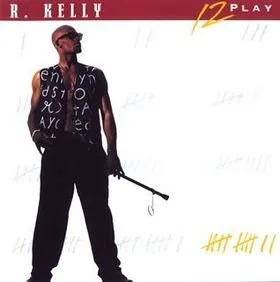
Before I gained awareness of R Kelly’s alleged ginormous sexual proclivities, I knew his music like everyone else, especially the children of the 90s. The first song I would hear him sing was “For You” which was playing on the radio while my now deceased uncle, Unyime sang passionately alongside. A then undergraduate at the University of Calabar, my uncle had just found a new girlfriend and his excitement was profound and contagious. This was one of the early moments in life when I realized that the woman is the prize in actuality. Patriarchy could weaponize religion, culture and politics to reverse the natural order and exercise a false sense of power, but the truth remained immutable. I asked to know the singer of the song and was told his name as being R. Kelly. I found “For You” to be a soulfully vibrant lovesong and quite underrated. The arrangement, performance, background singing, instrumentation is stellar. Since the dawn of the 90s, I became a Kellz fan.
I enjoyed his groovy bass lines, intense sensuality and passionate singing. His high libido oozed through his songs and I frankly enjoyed the audacious sexuality of his lyricsm, albeit uncritically at the time. I had yet to learn about patriarchal structures, its misogyny and exploitation of womens’ bodies. Despite my christianized socialization, I had a deep knowing that human sexuality was unsinful, except weaponized for exploitation, dehumanization and harm. I knew that the religious propaganda of female sexual control and suppression was inherently diabolical. Consequently, I listened to songs like “Bump n Grind”, “Sex Me”, “12 Play”, “It Seems Like You’re Ready”, “Your Body’s Callin’ For Me”, etc, with an open mind. The reality I had chosen for myself was sanitized of inauthenticity and hypocrisy, as such R. Kelly could be played and enjoyed unapologetically.
But 12 Play was not an unskippable album as I tended to skip some songs like the odious and ugly sounding “The Crotch On You” which I hardly acknowledged due to the title. I wish I had because it embodies Kellz’ hyper predatory nature and paedophilic tendency which somewhat flew under the radar at the time, until his scandalous matrimony to 15-year old Aaliyah was exposed. The street-savvy Kelly who before stardom had entertained on the streets as a busker would reportedly be caught on tape in 2002 having sex with a minor. He would be charged with 21 counts of child pornography offences in Chicago and 12 in Florida.
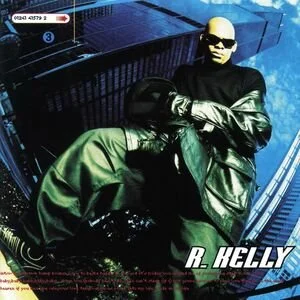
If 12 Play (1993) was an evidence of testosteronic overload and misogyny with a tapestry of hypersexual melodies, the sophomore album R. Kelly (1995) wove sacred and profane sentiments into its lyrical fabric which served as a response to critics of his sexually drenched debut album. Apparently, many were unappreciative of his lyrics, but “even the statute of liberty want[ed] some bump and grind”. Kelly showed that even sexuality is sacred by positioning the sacred side by side with its fictitious and secularized foe (history has shown that the biggest sexual predators on the planet are the clergymen).
His religiosity shines in songs like “The Sermon”, “Heaven If You Hear Me” and “Religious Love”. His romantic heart was seen in “I Can’t Sleep Babe (If I)”, “Baby, Baby, Baby, Baby, Baby”, “Tempo Slow” and “Trade In My Life”. And the raw sexuality which became his hallmark is eminent in “You Remind Me of Something” and “Step In My Room”. But the most outstanding track was “As I Look Into My Life” with its self-reflexivity in the words “Men love and respect that woman. And bring her happiness”. To the listener, Kelly’s consciousness had evolved to an understanding that the woman is not a sexual object, but a whole being. However, future events would publicly expose and indict him as a sex predator whose seeming self awareness was merely performative than pragmatic.
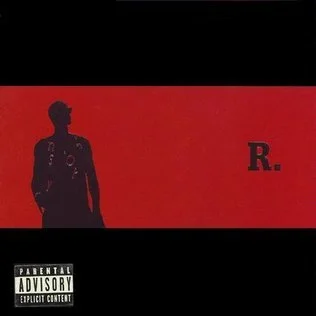
In 1998, R. would be released to public acclaim. Although not my favourite as it deviated from his conventional music trajectory, it was a signifier of the newly reinvented R&B musicscape of the 1990s with a convergence of R&B and Hip-Hop. In his seminal work, The Death of R&B, Nelson George recounts the factors which militated against R&B’s progression and cites music incorporation through the acquisition of independent labels, the push for crossover artists for profit maximization, the introduction of synthesizers which ignited massive instrumentalists redundancy, etc., as some of the plausible reasons. However, I would argue that George was hasty in his conclusion of R&B’s demise. R&B was comatose at the time his book was published. It would actually perish following its aesthetical juxtaposition with Hip-Hop in the 1990s.
In the previous decade, both genres and their signifiers were often at loggerheads due to the categorization and stratification of R&B as the preferred music of the integrated and educated black. While Hip-hop was the lower class blacks pushback against public erasure and a vehicle for attaining visibility. Music preference became a class marker which dichotomised the black community. The fusion of both genres while commercially innovative would sanitize both of their genric integrity by fostering a forced assimilation whereby singers become rappers and vice-versa. R Kellys R. symbolizes this fusion as he would extensively collaborate with the top Hip-Hop players of the era like Nas, Foxy Brown, Sean Combs, Jay Z, etc.
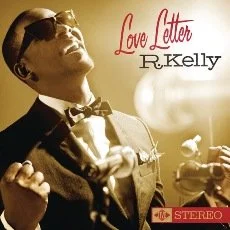
TP-2.com was released at the turn of the millennium and left me feeling constipated with its hip-hopy vibration, but for “The Storm Is Over”. Thereafter, I would avoid Kellz’ music till the soulful masterpiece Love Letter (2010) which positioned him amongst soul music’s master crooners. It is a tapestry of artful mimicry which invokes the spirits of legendary music icons like Michael Jackson, whose essence flows through “Not Feeling The Love” while Marvin Gaye is invoked in “Music Must Be A Lady”. It is a departure from previous releases characterized by a notable absence of sexual stimulation with love and devotion as its primary framework. It morphed R. Kelly into a bonafide loveman and fine R&B/Soul gentleman.
This gentleman, like Whitney Houston, was also a force to reckon with in the film soundtrack category. He earned a reputation for producing and singing a fine array of memorable and inspirational/philosophical songs. He is perhaps known by nominal and casual listeners for exceptionally brilliant songs like “I Believe I Can Fly” (Space Jam, 1996), “Gotham City (Batman & Robin, 1997)”, “Bad Man” (Shaft, 2000) and “The World’s Greatest” (Ali, 2001). Songs like “I Am Your Angel” and “The Storm Is Over” from the albums R. and TP-2.com respectively, deliver a similar impact.
Known to be the writer of all his songs, R. Kelly can be seen as a complex character with the unique artistic prowess to explore multiple subject matters. His versatility transcends the homogenous expectation of a system that seeks predictability and one dimensionality. His songs mirror the interpersonal, social and philosophical trajectories of everyday life which endeared him to a generation of fans and conveyed on him the status of a key player in the industry with power, privilege, infallibility and immunity to boot. His hypersexual songs went uncensored for years because they echoed the sentiments of a patriarchal cult which views women as sperm receptacles with exploitable and disposable bodies.
And since the patriarchy thrives on a foundation of disloyalty, dishonesty and betrayal, it subjects one of its valuable agents to public scorn and mockery, and then has the effrontery to prescribe to the public his cancellation and erasure from collective consciousness. Make no mistake, R. Kelly’s vices are unconscionable, like Roman Polanski, Harvey Weinstein, Bill Cosby, Bob Weinstein, Woody Allen, Ex-Prince Andrew, Jeffrey Epstein, and all other steins, etc., but this selective justice and sensationalized public crucifixion is hypocritical. Even Epstein gets to be spared the indignity of direct public opprobrium by conveniently “dying”. While Ex-Prince Andrew gets arrested by the police on his 66th birthday and spends a cosy leisurely day with them and returns home, the next day. Ain’t that amazing?
The sexual abuse of children and women by men is as old as time. Predators have often escaped accountability and consequences, and the more so, when they are billionaires wielding massive power and influence because the patriarchal system suffers from a acute justice deficiency. Recently, about three million Epstein files were reportedly released which document his clients said to be high profile men for whom he supplied sex preys and helped facilitate their money laundering schemes. It would be refreshing to see these men publicly villified and crucified to the max as it does appear that all animals are equal, but some are more equal than others.
Until the patriarchy summarily on a global scale holds accountable and punishes all sex offenders, sex traffickers, rapists, both in the domestic and public domains, I shall continue to listen to R. Kelly’s songs. His said crime is intolerable but his music serves as a relic of human complexity and how light and dark often parallel each other within a framework. It is incomprehensible, inexplicable and indigestible. How does a man possess such musical dexterity bringing joy to many hearts and simultaneously abuse women sexually afflicting them with excruciating pain?
As an 80s baby, who grew up on the music of Michael Jackson, Whitney Houston, Prince and Madonna, the next big names introduced to that list included Mariah Carey and R. Kelly in the 90s. Kelly’s was the sound of a generation whose impact was undeniable because the everyday man on the Nigerian street and members of the elite class alike knew and esteemed his songs. The former believed they could literally and figuratively fly and touch the sky. It was a song of hope which gave meaning in moments of gloom and depression. It energized and provided a cathartic release from trauma in a traumatized world. Many often forget or ignore that this was the creation of an equally traumatized man who as a child had been subjected to sexual abuse by a family member.
Unfortunately, due to the indoctrination of a toxic and dysfunctional patriarchal socialization, Kelly failed to cultivate a sense of self awareness which inspires inner work and self-transformation and would transition from being the abused to become an abuser. This is why I understand because the earth exists in a traumatized state. We are born into traumatization, by default and our traumatizer is the patriarchy!
It behooves the collective to self-introspect and self-transform each on an individual level. Like Michael Jackson observes in the song “Man In The Mirror”, let us examine ourselves before the mirror and change our ways. As one who has also dealt with a fair share of trauma in this life’s journey, I refuse to be entangled in the herd mentality web which maligns another traumatized individual. R.Kelly’s antecedents are condemnable, but I understand where his trauma originates from and why it went unchecked. As for the music, let it remain a specimen for understanding the ambivalence of human nature. I come in peace!