Music in the Heydays of AIDS
The prelude to the AIDS pandemic which marked a horrendous chapter in history and pop culture was disco, with its counterculturality and progressive optimism, undergirded by sexual liberalism as a response to erotic sounds in nightclubs and the street. This trend would suffer a deadly blow as hitherto healthy young men began to die mysteriously in droves.
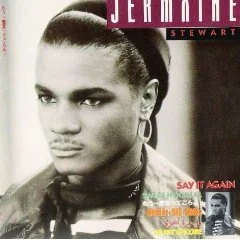
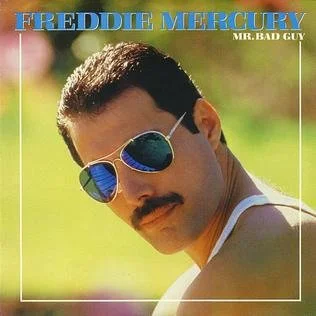
Initially designated as the Gay Related Immunodeficiency Disease, AIDS was declared official in 1981, however, thousands are estimated to have been infected by 1978. Since gay men were the primary casualties, it appeared to be a systemic retribution for their gayness.
Since disco had been the music of the marginalized, namely people of colour and the gay community, these demographics immediately faced stigmatization and collective opprobrium for the plague. Some celebrity casualities included Liberace, Rock Hudson, Sylvester, Freddie Mercury, Kim d’ Estainville, Jermaine Stewart, Tina Chow, etc.

Tina Chow
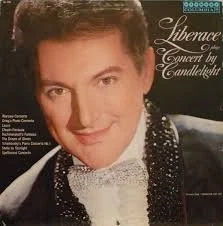
Liberace
The era was marked by a tsunami of hysteria, fear and misinformation. Words making the rounds was that it could be contracted through a cold, scratches, toilet seats, infection, sneezes, touch, hugs, saliva, shared utensils and sex. The sexually active were liable to being decimated by the virus, as such the act of copulation became taboo. Humanity would hereafter be introduced to a new consciousness. A certain rubber product called condom would become the new preventative measure prescribed for the enjoyment of nature’s call, to curtail the spread of the pandemic. Consequently, white supremacist capitalist patriarchy, as feminist theorist bell hooks would call it, had a field day profiteering from its own biological invention.
As a key participant in the Studio 54 disco/gay culture, Grace Jones retrospectively asserts that: “ I still feel there was a conspiracy. If you hang out long enough with Timothy Leary you realize how the government is always asking for new lethal poisons to be invented. For security reasons, for defense reasons, to control populations, they would synthesize a substance that was not meant to exist in nature…..The way AIDS appeared out of nowhere, it makes you wonder. They blamed it on fucking monkeys….I think someone high up took a look at what was happening in the New York sex rooms in the mid-70s, in the secret Studio 54 chambers, the straights that swung, the colors that mixed, and the gays exploring everything, and thought, We need to sort this out. They spiked the punch”. (I’ll Never Write My Memoirs, 323-324).
In the wake of the Corona pandemic and emerging conspiratorial narratives which indict world governments of a collusion to effect population control through vaccinations, the words of Grace Jones hits like a thunderbolt. But in 1985, the government was perceptibly saintly and benevolent, even though the Ronald Reagan administration is said to have ignored and mocked the pandemic and its casualties.
Despite the looming darkness and despair, the tragedy ignited the emergence of activism through a cross-section of artistic voices, who weaponized music for awareness creation, education, mobilization, challenging stigmatization and facilitation of social justice.
Music also engendered the visibility of casualties and their families serving as a conduit for the expression of emotions about their loss, pains and fears of their new reality. Music served as an avenue of emotional exchange and solidarity for casualties in the 1980s. Old songs regained new meaning and currency while new ones were penned. These reflected the resistance, sadness, hope and courage in the face of adversity. Thereafter, music was weaponized to conscientize the world population about the new reality and interventions designed to curb the pandemic. Out of the blues, HIV/AIDS had come to stay and would engage the attention of government, religious bodies, civil societies, etc.
In a previously Christian fundamentalist society whereby human sexuality was highly policed, the AIDS era opened Pandora’s box to facilitate open mainstream dialectics about sex, particularly the non-heterosexual kind, which would foster the emergence and positioning of the LGBTQ movement at the forefront, as one to be taken seriously.
These were some of the songs of that gloomy era.
1. Bruce Springsteen. “Streets of Philadelphia” https://www.youtube.com/watch?v=h6K0u5Z6JFM Soundtrack to the Film Philadelphia (1993).
2. Cyndi Lauper. “True Colors” https://www.youtube.com/watch?v=ExkmlgRNIhM Twelve Deadly Cyns (1986).
3. Diana Ross. “I’m Coming Out” https://www.youtube.com/watch?v=E2muOFNlvVk Diana (1980).
4. Dionne Warwick. “That’s What Friends Are For” https://www.youtube.com/watch?v=tgNBusag3qA Friends (1985).
5. Elton John. “The Last Song” https://www.youtube.com/watch?v=R5eEQJZm7ZM The One (1992).
6. George Michael. “Jesus to a Child” https://www.youtube.com/watch?v=FoGhN9r1L9o Older (1996).
7. Gloria Gaynor. “I Will Survive” https://www.youtube.com/watch?v=FHhZPp08s74 Love Tracks (1978).
8. Janet Jackson. “Together Again” https://www.youtube.com/watch?v=5CHEqJgf7dw Again (1997).
9. Jody Watley. “When A Man Love A Woman” https://www.youtube.com/watch?v=R2HR5J41W2k Intimacy (1993).
10. Neneh Cherry. “I’ve Got You Under My Skin” https://www.youtube.com/watch?v=hsk7ZUwJst0 I’ve Got You Under My Skin- Remixes (1990).
11. Queen. “I Want To Break Free” https://www.youtube.com/watch?v=wIqa9uVnXCQ The Works (1984).
12. Queen Latifah. “Coochie Bang” https://www.youtube.com/watch?v=0UAEvbvv3xs Black Reign (1993).
13. Salt ‘n’ Pepa. “Let’s Talk About Sex” https://www.youtube.com/watch?v=bu1ESwrwqhE Blacks’ Magic (1990).
14. Sylvester. “You Make Me Feel (Mighty Real)” https://www.youtube.com/watch?v=Uw1OZmwidNo Step II (1978).
15. TLC. “Waterfalls” https://www.youtube.com/watch?v=A_iTphwVNYs CrazySexyCool (1995).
16. Wu Tang Clan. “America” https://www.youtube.com/watch?v=L4B-DyaMaPo America Is Dying Slowly (1996).
17. Wyclef Jean. “Anything Can Happen” https://www.youtube.com/watch?v=b61f6Yp4iCoWyclef Jean Presents The Carnival (1997).