The Funkiness of Earth, Wind & Fire
It is 1994 and yours sincerely is glued to the TV to watch the NAACP Image Awards. It is a fun-filled and delightful episode as the crème de la crème of the black American entertainment division of Hollywood gather to honour the phenomenal artists of the previous year.
It is the year of Whitney Houston as she carts away five awards in one night. It is the year that Denzel Washington wins “Best Actor of the Year” for his role in Malcolm X, and thanks Ms. Houston for not being nominated in that category.
It is also the year that Earth, Wind and Fire wins the NAACP Hall of Fame award. This is my first introduction to the phenomenal group and the best band of all times. That night a music tribute is paid to them by The Emotions, Seidah Garrett, Howard Hewett and Shai. They perform a medley of songs which include “September”, “Sing a Song”, “Boogie Wonderland”, “ You Can’t Hide Love”, “Devotion, “Head to the Sky”, “Get Away”, “That’s the Way of the World”, “Reasons”, “After the Love is Gone”, “Let’s Groove”, and “Shining Star”. The iconic group is ushered to the stage with the majestic opening chord of “In the Stone”.
It is the first time to see Maurice White and his master bassist brother, Verdine, and the most outstanding falsetto of them all, Philip Bailey. Many years thereafter, my journey to discover their weighty catalogue would begin and they would become my favourite male band, followed closely by Mint Condition.
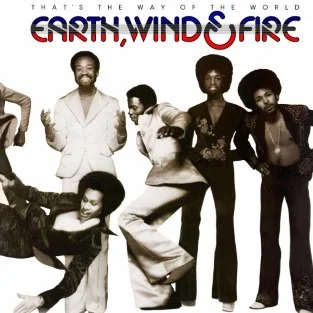
EWF represents music sophistication in all its finest hues. Thanks to their enthralling lead and background vocals, seamless instrumentals, exquisite compositions, evocative and inspiring lyricism, top notch production, pristine arrangement, tasteful harmonization, punchy basslines, affluent orchestration, energetic performance and highly qualitative musicianship.
Like their name indicates, they represent musically the intensity of the elements which commands collective attention. Who can ignore the perfectionist leadership of Maurice or polished vocal falsetto of Philip or the scintillating bass guitar of Verdine or the bombastic horn riffs or the fantastic drums of the fantabulous musicians? Not me!
EWF alongside Parliament were the dominant forces and signifiers of Funk music in the 1970s. Semantically, the term “funk” was described as realness, attractive, or something offensive. Funk music was the creation of R&B and jazz musicians who operated within self-contained groups. Consequently, the complex idiom defies categorization due to its convergence of R&B styled horn arrangements, jazzy solos, rock-based guitar timbres and soul’s vocal. Funk attests to the black tenacity amidst unsavoury socio-economic circumstances. Just like other African American music idioms, funk mirrors the demographics’ lived experiences, “who traditionally have used music to express their innermost feelings, preserve their identity, and record their history” (Maultsby, Portia 304).
EWF didnot just record history, they evoked ancestral memory as their lyricism which propagated love and peace was African cosmology-inspired. Other concepts promoted were spirituality, self-motivation, self-awareness and awareness of the world.
EWF achieved enormous commercial success in the 1970s as the conception of Maurice White who started a music production partnership with Wade Flemons in 1969. Together with Don Whitehead, a keyboardist and his brother Verdine on the bass guitar, they created The Salty Peppers and scored a minor hit “La La Time” which was released by their Hummit Label in 1969. This drew the attention of Capitol Records where they were signed and scored another unimpressive single, “Uh Huh Yeah”. Thereafter, the group was dropped.
The group would embark on a mission of revamping its architecture and creating a new identity through the recruitment of a vocalist Sherry Scott, guitarists Michael Beale, Phillard Williams on percussion and three horn players namely Alex Thomas, Chet Thomas, and Leslie Drayton. They would become Earth Wind and Fire.
Their eponymous funk-intense debut album scored a minor hit “Love is Life” released in 1971 on Warner Brothers. The Kalimba, an idiophone native to the Shona people of Zimbabwe would be introduced as a sonic marker of the group, and is featured on the song “Bad Tune”.
Following his meeting with Denver native and four octave range- falsetto singer Philip Bailey, White reconfigured the band with Bailey as the frontman. In addition, more instrumentalists were recruited like Ralph Johnson on the drums, Al McKay and Johnny Graham on the guitar, Larry Dunn on keyboard and Andrew Woolfolk on saxophone. Dunn and Woolfolk were members of the band Friends & Love, alongside Bailey.
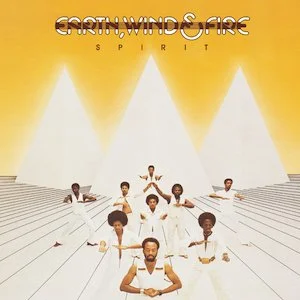
Open Our Eyes (1974), the fourth album was their breakthrough with the singles “Mighty Mighty”, “Devotion” and “Kalimba Story”, which propagated strong vibrations like hopefulness seasoned with African metaphors and Egyptian symbolism. That’s The Way Of The World (1975) engraved their feet on stardom’s path with hit songs like “That’s the Way of the World”, “Reasons” and “Shining Star”. Spirit (1976) made an indelible impact with “Getaway”, “Saturday Nite” as the driving forces on the music chart. All’ n All (1977) has been adjudged their magnus opus with superb singles like “Fantasy”, “Serpentine Fire” and “Jupiter”.
In 1979, the band would show their awareness of the times by creating a disco dance classic “Boogie Wonderland” featuring The Emotions in 1979. Other hits on the album include the ballad “After The Love Has Gone”, “Can’t Let Go”, “In The Stone” and “Star”.
Faces (1980) was, according to Maurice White, his favourite album. It scored singles like the opener “Let Me Talk”, “You”, “Back on the Road” and “Love Goes On”. By 1983, the music production terrain underwent drastic change. Two albums Powerlight and Electric Universe would be released in the same year. The former had impressive singles like “Fall In Love With Me”, but the latter was even more significant with “Let’s Groove” which mirrors the development within popular music at the time, the synth.
In retrospect, the highspiritedness of the group is prominent from 1975 to 1981. Thereafter, the spirituality and soul are sanitized amplified by the exclusion of the horn and bass sections, and the incorporation of the synth and keyboard; absence of the organic and inspirational edge; exit of core members. The era of music programming and digitalization engendered a denaturalization of their sound.
By the next year, the group had dispersed. Bailey would go on a solo journey in 1984 with Chinese Wall, scoring a huge hit “Easy Lover” with Phil Collins. While White would also have a solo run and major production successes with Barbra Streisand, Deniece Williams, Neil Diamond, etc.
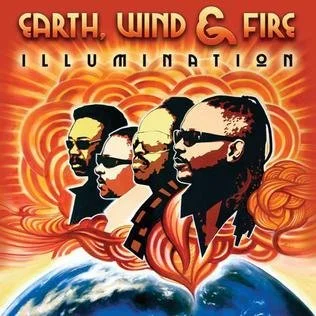
The group would reconverge in 1987 with their reunion album Touch The World to further demonstrate their penchant for adaptability as seen in the techno-funk oriented single “System Of Survival”. Heritage (1990) which was an attempt to capture a new generation of audience through collaborations with MC Hammer, The Boys, etc, was disastrous. Perhaps, as a result of the culmination of the Columbia relationship, the soulfulness returns as they find their groove on the R&B route with the album Millennium (1993) and The Promise (2003). The latter infuses R&B, funk, neo-soul and a slice of Latino beat, to reflect the music terrain of the early 2000s. A similar feat is achieved with their neo-soul driven Illumination (2005) which acknowledges key players like Raphael Saadiq, Floetry, Brian McKnight, Kenny G, etc.
EWF is the greatest band of all times, but its legacy is marred by White’s funkiness demonstrated by his financial incapicitation of band members and colonization of their song-writing credentials. Many of them departed the band along the way and the change in the EWF sound has often been attributed thereto. Apparently, the externalization of brotherhood and sonic propagation of love was easier preached than practised for White. It is unclear if he made amends in his latter years, prior to his demise. However, the story of EWF is a paradox as White mirrored the parasitism prevalent within the music industry. He, like other music men like Clive Davis, Quincy Jones, Berry Gordy, and many others operated a slave system where band members and signees were extracted to their detriment.
But, the music lives on!