Four+1 Diss-songs in R&B History
Music is a conduit for the expression and dissemination of emotions, prominently love songs, happy and generally positive vibrational songs. As mentioned in a previous post, the degradation of music began when it became a conduit for the propagation of pain, sorrow and even vindictiveness. As such, melancholic songs, sad songs, bitter-sweet songs have become cultural fixtures and are deeply embedded in the collective psyche.
Within the purview of R&B, five songs embody this negative emotion, as opposed to Hip-hop/Rap, where “diss-songs” are a dime a dozen. These songs include Jermaine Jackson’s “Word to the Badd!”, After 7’s “Till You Do Me Right”, Babyface & Toni Braxton’s “I Wish” and Michael Jackson’s “Monkey Business” and “Dirty Diana”. The King of Pop was also the King of Diss and a Master of pettiness. And I write as a fan!
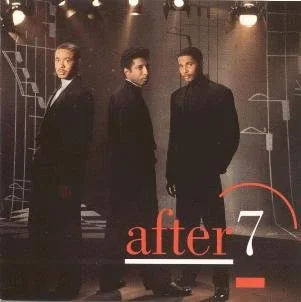
1. After 7’s “Till You Do Me Right” https://www.youtube.com/watch?v=9qan0rgaVag (Reflections, 1995) would have to be the first song that lays a curse on a hypothetical lover who failed at the reciprocation of love, loyalty and devotion. It is written by Kenneth “Babyface” Edmonds, R&B’s outstandingly legendary song-writer and producer, for a male group which contains two of his older brothers. The bridge states : “Til you do me right/ I don't even want to talk to you/ I don't even want to hear you speak my name/ 'Til you do me right/ Only wrong is gonna come to you/ Nothing good is gonna come to you /'Til you change your ways/ Until you change your evil ways.
This is a sonic oddity and unorthodox for men to lay curses on women after a heartbreak. The reasons being that men have historically labelled women as over-emotional and are usually the default heartbreakers who leave women high and dry, while women lay the curses as a coping mechanism. It then holds true that relationally, men lack the capacity to tolerate or take in their strides the trauma that they occupationally subject women to.
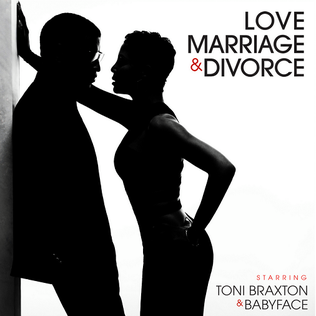
2. Toni Braxton sings “I Wish” https://www.youtube.com/watch?v=DirISfo3jDU in (Love, Marriage & Divorce, 2014), a collaborative album with Babyface, her favourite duet partner. It conveys the hate and bitterness that follows a divorce engendered by infidelity. In the song, she sings: “ I wish, I wish,I wish/ she'd break your heart /Like you did to me/I hope you're unhappy/And I hope, I hope,I hope/ she gives you a disease/So that you will see/But not enough to make you die/But only make you cry/Like you did me.
It is a given to harbour ill-will towards a partner after a break-up, but never before has this been tranposed into a song lyric. Braxton revealed her Parent’s divorce and the aftermath as being the inspiration for this song. Well, a lot of drama probably occured!
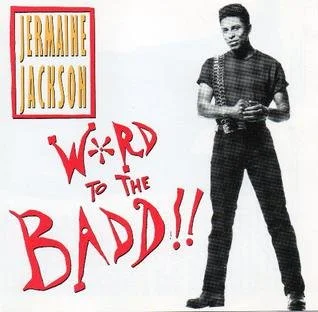
3. Jermaine Jackson “Word to the Badd” https://www.youtube.com/watch?v=EIdzNLnzdhw (You Said, 1991) is ambiguous. “Badd” apparently references his brother, Michael’s self-description on the song “Bad”, which is an African American Vernacular English slang meaning the very opposite, that is excellent, good, etc.
On one hand, it appears to be a song about a brotherly concern for a brother’s wellbeing, where he rants about MJ’s neglect of the family, being a solitary superstar and changing his skin colour; but on the other hand, it epitomizes sibling rivalry at its best and has been described as a signifier of Jermaine’s bitterness and jealousy of Michael Jackson, his younger brother. Legend has it that when MJ considered a solo career, Jermaine tried to prevent his ambition.
When the Jackson 5 was the rave, Jermaine served as lead singer until Michael began to share the spotlight and even overtake him in the process. Michael would become the megastar that the world knew him to be and in the process, corner two producers namely LA Reid and Babyface, who were working on Jermaine’s comeback album in the early 90s.
LA Reid had revealed in an interview that Michael outrightly snatched him and Babyface for himself and stalled the production of Jermaine’s comeback album which was ongoing. Upon their decision to further their production on the album, Michael purportedly said that “He’ll have to live with it because those are the rules”. Jermaine had enjoyed a measure of success scoring two #1 R&B albums and 5 gold certified albums. His songs received favourable radio airplay. However, Michael is alleged to have sabotaged his brother’s career by demanding Arista records underpromotion of Jermaine’s album while charging radio stations to refrain from playing his songs.
The motive was purportedly the fear of being overshadowed in the process of releasing the Dangerous album, by any family member. Jermaine is said to have reached out multiple times in the wake of the multiple career sabotages from his brother and was ignored. Eventually, the song “Word to the Badd” was produced, allowing him ventilate his anger at his brother and frustration about the issue.
According to Reid, Jermaine indicated that he wanted to create a song about his brother and “talk about how he's treated me through the years, like how every time I find producers like you guys, he takes my producers. He doesn't care about his family or anybody but himself”.
The song was supposedly meant to be unreleased but got leaked and Michael would censor its radio airplay. While he may be the most popular and talented from the Jackson family, it remains to be said that his actions had hurt his older brother and Jermaine’s song was an human attempt to get his pound of flesh.
Jermaine was not a pushover as he was the first to enjoy a major career breakthrough in the family and multiple recognitions on the chart. Chances are that more successes might have followed had Michael not prevented producers from working with him. The two men eventually reconciled and Jermaine made an appearance during Michael’s 30th Anniversary Celebration in the early 2000s.
He became quite vocal in defence of his brother during the latter’s public defamation travails in the 1990s and 2000s. Jermaine was instrumental to Michael’s relocation to Bahrain, as he had converted to Islam in the 1980s and resided in the Middle East. His personal connection with the Bahrain royal family fostered and provided a secure and private space for Michael, where he could enjoy some peace and rest in the wake of his public trials.
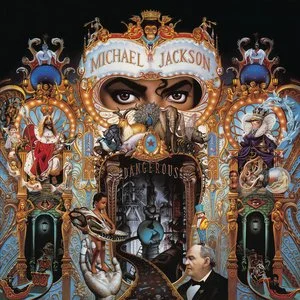
4. Michael Jackson “Monkey Business” (Dangerous, unreleased material) https://www.youtube.com/watch?v=LpL0gzU2giw was MJ’s reprisal against his brother, Jermaine Jackson. The song encapsulates the sordidness of the latter who married the former partner of their younger brother, Randy. The woman, Alejandra Genevieve Oaziaza had dated Randy Jackson in the 1980s and they had two children together. Jermaine would after their break-up marry her from 1995 to 2004, and both had Jermajesty and Jaafar, who depicted MJ in a recently released Biopic about the music icon.
MJ was a certified shademaster who knew how to target the jugular of his offenders or haters, irrespective of the nature of relationship they shared, as the next song on this list would show.
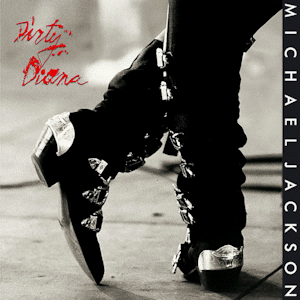
5. Michael Jackson “Dirty Diana” https://www.youtube.com/watch?v=aUD0juRwb3I (Bad, 1987).
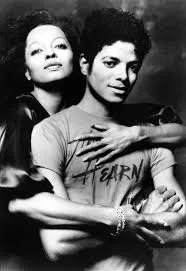
It began as a rumour in the 1980s, but with the passage of time, the grapevine was vindicated about MJ and Ms. Diana Ross’ romance. It was said that she was the love of his life and that he adorned a room in his home with her pictures and paintings and had an altar where he burned candles for her on a daily basis. Diana was the first woman he fell in love with and according to his family members, MJ desperately wanted the role in The Wiz, a 1978 American musical contemporary fantasy film, in order to gain proximity to her. While he wrote songs like “Muscles” for her, she was the subject of his love and heartbreak songs like “Remember the Time”, “Just Good Friends”, “In The Closet”, etc. His brother Tito, would quip in an interview “Man, that boy loved himself some Diana Ross!! He couldn't even hide how much he loved her!!
According to the grapevine, he had been enamoured of her since age 12. As Sade would sing, this was no ordinary love because he bragged about how he was going to marry her to his family, and often compared her beauty to his sisters. They met when he was 9, began their relationship when he was 17 and by 19, Ms. Ross had allegedly disvirgined him. By age 20, he wanted her forever as his wife. Diana would accept after years of persuasion, but was age-shamed by Ms. Katherine for trying to rob the cradle and morally corrupt her son. She was fourteen years older than him.
The distressed Diana walked away in 1985 into the arms of Norwegian shipping magnate and mountaineer Arne Naess, Jr. Both married the next year. MJ was devastated and wrote “Dirty Diana” out of vindictiveness, where he slut shames her (yes, the King of pop was also the King of misogyny and pettiness, but for the love of his music, we forgive him, won’t we?). Allegedly, Diana had a penchant for promiscuity and had numerous affairs with other musicians while with MJ like the Commodores’ Lionel Richie, KISS’ Gene Simmons and the BeeGees’ Barry Gibb.
It took Quincy Jones’ intervention to mask her identity in the lyrics. Thanks to him the second verse was flipped to reference a groupie. A groupie is a female or male fan who follows celebrities with the intention of establishing personal contact or seeking sexual intimacy with them. MJ would reveal his love for her in later interviews and how it took him years to get over her. He called her the one who had hurt him the most of all his past lovers. “Dirty Diana” sparked bad blood between the two which was later resolved and Diana would incorporate and play the song at her shows. It has been observed that her marriage failed due to this relationship as they always embarked on trips and cruises together.
After the shaming and disgrace, MJ worked hard to restore the relationship and win Diana back. Many love songs, according to close associates were written about her. In his album HIStory…..(1995), a picture of MJ and Diana where the latter wraps her arms around him from behind is included on the album liner. And underneath, he blatantly writes “I Love You, Diana” at a time while still married to Lisa Marie Presley. The bond between the couple extended into his will as Diana Ross was named the backup legal guardian of Michael Jackson’s three children and estate, in the event of his mother’s inability or willingness to function in that capacity.