The Janet vs Michael Rivalry
Janet Damita Jackson’s bold quest and drive for selfhood and deliverance from the obscurity that comes with a brother with a gargantuan megastar image needs to be studied. Between Janet Jackson (1982) and Dream Street (1984), she was Michael Jackson’s little sister. By the early 2000s, she had attained the peak of pop music success with a five-album streak of number one pop albums. In other words, every album Ms. Jackson made from 1986 to 2001 namely: Control, Rhythm Nation 1814, janet., The Velvet Rope and All for You have been outstandingly impressive with massive back-to-back hits. With Control, Janet had self-actualized and developed a resolute autonomy.
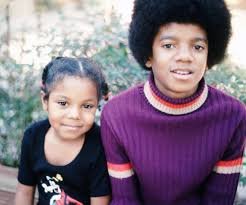
Michael Jackson, “The King of Pop” on the other hand, has received multifarious decorations and is singularly credited not just for his great music, but the influence through innovation and defining the medium that is the music video. Known for his visual artistry and pristinely curated dance routines, MTV’s popularity escalated following the broadcast of MJ’s videos in the 1980s. Thanks to him, MTV would become deracialized allowing for inclusivity of non-white artists who came after him.
These two siblings are the most successful artists in pop history. On March 12, 1991, Janet signed a recording deal with Virgin Records for an estimated $40 million. Nine days later, MJ would also renew his contract with Sony for $65 million. Between the two was a net gain of $100 million . Shockingly, as writer Danyel Smith has noted in her work, Shine Bright (2022), “the fascinating story of Black siblings going head to head for global domination in a recently segregated country via an industry that normalized that very segregation…went, and still goes, virtually untold” (241).
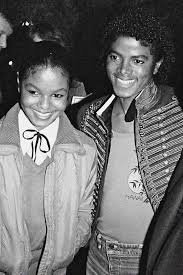
The artistic rivalry between the two Jacksons has been palpable. Janet would admit in an interview with Danyel Smith that she feels competitive with Michael Jackson, a feeling propelled by the cutthroat business nature of the industry. In the aftermath of janet., she was a bigger artist than MJ, as producer Jimmy Jam has noted. It was during this period that MJ was accused of child molestation. The 1990s were the antitheses of the 1980s for MJ’s career trajectory. He transitioned from being a celebrated multitalented megastar who basked in the euphoria of global praise and adulation, to a weirdo accused of paedophilia whose every move was under scrutiny by the media.
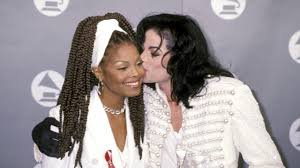
His frustration is vented in the song “Scream” featured in the album HIStory : Past, Present and Future, Book I (1995), and he calls for his sister’s solidarity on the project. Written by Janet, MJ and producers Jimmy Jam and Terry Lewis, the song channels MJ’s anger about the unceasing media reporting on unproven claims of child abuse.
This song sets the stage for surprising revelations, one being that MJ did feel intimidated by his sister, Janet, which would lead to distancing by the latter. In the song, Janet’s vocals are intentionally shrunken. “…In the song, Janet’s vocals are mixed way under Michael’s. I wanted to understand how and why Michael is louder than Janet for the entire song. It bothered me still, this sonic shrinking of Janet Jackson by Michael and his team, just when Janet’s stamp of loyalty was most needed” (Smith, 2022:245).
Danyel Smith’s interview with Jimmy Jam in 2014 opens a can of worms. Jam reveals how hesitant he felt about Janet’s participation in the record. But, her altruistic self wanted to help her brother. However, the song was not tailored to seamlessly integrate her style and melody, but Michael’s. “We had to figure out, how are we going to make this work for Janet?”. (246). MJ had recorded his initial vocals in New York and Janet was cued to record after him. But then she declined and decided to execute hers in Minneapolis, the base of Terry Lewis and Jimmy Jam. Upon delivery to MJ, the King of Pop decided to resing his part, in Minneapolis. As the mix phase approached, Jam reveals that Michael said “We can use your engineer to mix the record.” And he responded, “Michael, I don’t care if my engineer mixes the record, but my engineer’s got to do Janet’s vocals” (246).
Nonetheless, when the record was finished and mastered, Janet’s team realized that her vocals had been stripped and downgraded. Thus, relegating her to the background while MJ claimed the frontrow. It was not a project that showcased equality and respect, but misogyny and subjugation of the female power. Apparently, the juxtaposition of Janet on the song at such a crucial time in his life, was MJ’s mechanism for ego stroking and dominance assertion as a falling megastar and elder brother to the menacing global megastar that was his sister, Janet Jackson. She has 5 Grammys to her name, sold over 150 million records and is a prolific songwriter, dancer and singer. Yes, the world recognized and knew her name, just like Michael’s, but not as his subordinate.
The record would debut at #5 on Billboard’s pop chart and also become a global pop hit, garnering a Grammy, 3 MTV Video Music Awards and a Billboard Music Video Award.