What Happened to Disco?
Originally, disco, an abbreviation of discothèque, described a music environment where people assembled to dance like party rooms, warehouses, dance spaces, etc. It would later shift to run the gamut of a music style, dance pattern, fashion and hair styles. Disco rose to prominence in the underground dance venues of 1970s New York. Its mark of distinction was the decentering of the singer/musician and emphasis on the key players and signifiers of production like the DJs, dancers and producers. The DJ was the star of the show akin to a saviour rendering help through music, when we infer from the lyrics of Indeep’s “Last Night A DJ Saved My Life”. He played the records and detected the music’s progression and range.
Tom Moulton is credited for developing the 12-inch disco mix format which facilitated the extension of the rhythmical parts of a song, thereby fostering danceability. This discovery was the outcome of his observation of club attendees who resonated with instrumental sequences and extensive jamming segments of the played track, while despising a record change which ruined the general mood and music flow. His idea revolutionized dance, enabling long hours of dancing sans break.
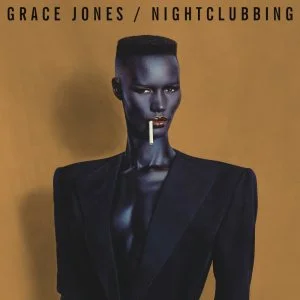
According to Grace Jones, one of disco’s prominent figures, “Disco in its purest sense means that you will come out of a place having gone into euphoria, feeling that you have rejoiced…..Mixing the music to completely control your emotions, bringing you up, taking you down, slowing you down, speeding you up, making you soft, making you hard” I’ll Never Write My Memoirs (144).
Initially, disco was socially exclusive and marketed towards les riches, atleast from the french perspective. It entailed a strong presence and enjoyment of jazz music played in Parisian clubs. But in the aftermath of its cross-pollination to other cities like London and New York, disco developed a radicalized identity underlined by conviction and resistance and a clientele especially within the New Yorkian geographic location which included the marginalized and voiceless, namely-ethnic minorities, women, youth, gays, who were chiefly excluded from participation in the political processes of society. It would further embrace the working class, struggling artists, hippies, etc.
In the early 1970s, disco music was the exclusive preserve of Black artists associated with Motown and Philadelphia International record labels. Its early inspiration was drawn from the combined repertoire of African American music traditions like jazz, soul, funk, pop, gospel, etc. It was instrumental to the emergence of rap music in the 1980s. Disco music began as an admixture of funk music and orchestration. According to legend, Isaac Haye’s “Shaft” was the first disco record ever made and in its aftermath the music idiom would gain traction across the US, made popular by Barry White and Gamble & Huff. Before the incursion of white incorporation and commercialization, the unadulterated form of disco music existed between 1971-1974, what came thereafter was counterfeited disco.
The genre would come under severe critique, often described as dead and soulless music. It would be denigrated in 1979 at Comiskey Field by fifty thousand purported white rock fans and straight white males who chanted “disco sucks” while burning piles of disco records. The popularity of disco was perceived as a threat to whiteness. According to Grace Jones, “Disco got a terrible reputation, like it was anti-music, but its beginnings were in many ways more radicalized, inclusive, and open-minded than rock. It was as much an assault on the corniness and narrow-mindedness of rock as punk. Where it ended up was the fault of the white, straight music business, which drained it of all its blackness and gayness, its rawness and volatility, its original contagious, transgressive abandon” (152).
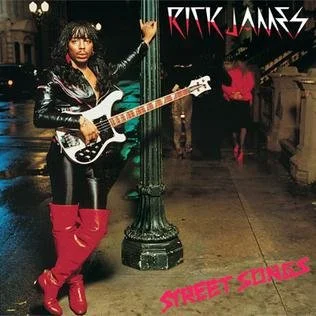
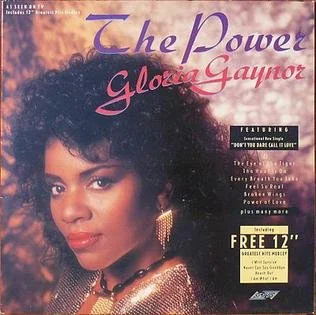
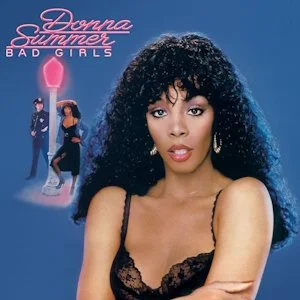
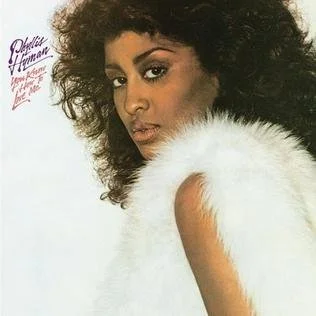
Furthermore, the anti-disco bias was fostered by the dominance of black artists, particularly women and signified Black women’s influence within the realms of American culture. Danyel Smith notes that the war against disco was propelled by a “ethnic cleansing of the charts, as disco’s origins were found predominantly in the Black, Latino and gay communities”Shine Bright (39). It was empowered by the energy and voices of Black women like Gloria Gaynor, Donna Summer, Diana Ross, Sister Sledge, Amii Stewart, Phyllis Hyman, etc.
The Queen of Disco, Donna Summer received public opprobrium from social commentators who undermined her art and participation in disco creation. Generally, Black women’s venture into other music genres beside R&B/soul was considered insulting to white sensibilities. To the white conceptualization, Danyel Smith stresses that disco was “an epithet that means : no matter what you create and how well it performs and how much people love it, it remains art unworthy of respect. You and your art are fake. You discarded your black soul as you chased your dreams. Your quest for success and for payments that come with it: that is bad. The messages were clear: be a Black woman in music-but stay in the R&B and soul tradition….Stay in the lane we made for you” (111).
An audacious and ambitious singer like Diana Ross was considered uppity for not knowing her place. It was sacrilegious to aspire beyond the box of white society’s expectations.
Eventually, disco would be turned into a cash cow necessitating collective milking. It became a ubiquitous merchandise sanitized of its uniqueness. Every Tom, Dick and Harry wanted a piece of the disco pie. As Smith reveals “Rock radio stations were switching to disco-and many in that community saw it not just as the loss of a job, or a staff, but as a scalpel to the belly of white culture” (110 ). Even Grace Jones notes that “Everyone jumped on the glitter wagon, from the Muppets to Kiss. Rod Stewart took it to bed. Ethel Merman even did a disco album when she was seventy-one, first track “There’s No Business like Show Business!” (152).
This signaled the beginning of the end which would culminate on July 12, 1979 at the Disco Demolition Night, at the behest of the Chicago radio DJ Steve Dahl, a casualty of the disco invasion whose show had been replaced by disco music. Listeners were directed to bring their disco records for demolition at a baseball game which evolved into a riot at Comiskey Park stadium. Although Disco would lose its mainstream appeal, it still enjoys currency in clubs and dance venues across the world, while its legacy is further cemented by the emergence of its progeny, house music.
What follows is a playlist of disco’s finest jams.
Amii Stewart. “Knock on Wood” https://www.youtube.com/watch?v=s95pTCDbIJ8Knock on Wood (1979).
Anita Ward. “Ring My Bell” https://www.youtube.com/watch?v=LvKUjl8qGKwSongs of Love (1979).
Ashford & Simpson. “It Seems To Hang On” https://www.youtube.com/watch?v=eNV22OnTgs4Is It Still Good to Ya (1978).
A Taste of Honey. “Boogie Oogie Oogie” https://www.youtube.com/watch?v=PhD58dP9kq8A Taste of Honey (1978).
Barry White. “Can’t Get Enough” https://www.youtube.com/watch?v=hgzCrjkcm0YCan’t Get Enough (1974).
Betty Wright. “Where Is The Love?” https://www.youtube.com/watch?v=pGDVx3SmKZADanger High Voltage (1974).
Boney M. “Daddy Cool” https://www.youtube.com/watch?v=iQEpTa3VqLUTake The Heat Off Me (1976).
Brothers Johnson. “Stomp!” https://www.youtube.com/watch?v=tPBDMihPRJALight Up The Night (1980).
B.T. Express. “Do It” https://www.youtube.com/watch?v=yvIQX_eDmN0Do It (1974).
Candi Staton. “Young Hearts Run Free” https://www.youtube.com/watch?v=uwRqITGekpAYoung Hearts Run Free (1976).
Carl Bean. “I Was Born This Way” https://www.youtube.com/watch?v=bj-qAapm3zcI Was Born This Way (1977).
Carl Douglas. “Kung Fu Fighting” https://www.youtube.com/watch?v=it3E6vtExSEKung Fu Fighting and Other Great Love Songs (1974).
Cheryl Lynn. “Got To Be Real” https://www.youtube.com/watch?v=fI569nw0YUQCheryl Lynn (1978).
Chic. “Le Freak” https://www.youtube.com/watch?v=aXgSHL7efKgC’est Chic (1978).
Diana Ross. “Love Hangover” https://www.youtube.com/watch?v=Y9-7rcKxIc8 Diana Ross (1976).
Dionne Warwick. “Once You Hit The Road” https://www.youtube.com/watch?v=K7xyF-q80aQTrack of the Cat (1975).
Donna Summer. “Last Dance” https://www.youtube.com/watch?v=561fy1vqIo8Bad Girls (1979).
Earth, Wind and Fire. “Boogie Wonderland” https://www.youtube.com/watch?v=_93PWvC2_vUI Am (1979).
Eddie Kendricks. “Girl You Need A Change Of Mind” https://www.youtube.com/watch?v=qGEsWteL5QoPeople….Hold On (1972).
Emotions. “Best Of My Love” https://www.youtube.com/watch?v=EbwXoN-XU5IRejoice (1977).
Evelyn “Champagne” King. “Shame” https://www.youtube.com/watch?v=nTpNN0zTmTsSmooth Talk (1977).
George McCrae. “Rock Your Baby” https://www.youtube.com/watch?v=6Q15-kql1YERock Your Baby (1975).
Gloria Gaynor. “I Will Survive” https://www.youtube.com/watch?v=FHhZPp08s74Love Tracks (1978).
Grace Jones. “I Need A Man” https://www.youtube.com/watch?v=Ud4iHB1-gW4Portfolio (1975).
Hot Chocolate. “You Sexy Thing” https://www.youtube.com/watch?v=98rKktwzzC8Hot Chocolate (1975).
Indeep. “Last Night A D.J. Saved My Life” https://www.youtube.com/watch?v=GtfZbj4J71ALast Night a D.J Saved My Life (1983).
Isaac Hayes. “Disco Connection” https://www.youtube.com/watch?v=1JEhTU3_1nYDisco Connection (1975).
Jackie Moore. “This Time Baby” https://www.youtube.com/watch?v=SNQwoTF7cxgI’m On My Way (1979).
Janet Jackson. “Young Love” https://www.youtube.com/watch?v=xWM_DUQaGeY Janet Jackson (1982).
Jean Carne.“Was That All It Was” https://www.youtube.com/watch?v=GidX4XT8bk8When I Found You Love (1979).
Linda Clifford. “Red Light” https://www.youtube.com/watch?v=o6NDaadpyR8 Soundtrack to Fame (1980).
Loleatta Holloway. “Love Sensation” https://www.youtube.com/watch?v=1h6Su3t5LqsLove Sensation (1980).
Love Unlimited Orchestra. “Love’s Theme” https://www.youtube.com/watch?v=RLTJ95kj9ngOs Ossos Do Barao (1973).
Manu Dibango. “Soul Makossa” https://www.youtube.com/watch?v=o0CeFX6E2yISoul Makossa (1972).
Melba Moore. “You Stepped Into My Life” https://www.youtube.com/watch?v=eV4Njx_oIkkMelba (1978).
MFSB. “Love Is The Message” https://www.youtube.com/watch?v=7b1umcmfaXYLove Is The Message (1973).
Michael Jackson. “Don’t Stop Till You Get Enough” https://www.youtube.com/watch?v=n3qQtSRmHxoOff The Wall (1979).
Patrice Rushen. “Forget Me Nots” https://www.youtube.com/watch?v=vP709vKwkD0Straight From The Heart (1982).
Phyllis Hyman. “You Know How To Love Me” https://www.youtube.com/watch?v=62onld3ZNacYou Know How To Love Me (1979).
Queen. “Another One Bites The Dust” https://www.youtube.com/watch?v=bdf_ll68Z8oThe Game (1980).
Rick James. “Give It To Me, Baby” https://www.youtube.com/watch?v=lHpG1BNznog Soundtrack to Bitchin’:The Sound and Fury of Rick James (1981).
Rod Stewart. “Do Ya Think I’m Sexy” https://www.youtube.com/watch?v=6F9N-6ITFnABlondes Have More Fun (1978).
Rolling Stones. “Miss You” https://www.youtube.com/watch?v=PKVXSo9ROpgSome Girls (1978).
Rose Royce. “Do Your Dance” https://www.youtube.com/watch?v=quDdfh4SEf0 Soundtrack to Car Wash (1977).
Sister Sledge. “We Are Family” https://www.youtube.com/watch?v=jdsqht1m1rEWe Are Family (1979).
Stephanie Mills. “ Never Knew Love Like This Before” https://www.youtube.com/watch?v=PEx1GJdIphMSweet Sensation (1980).
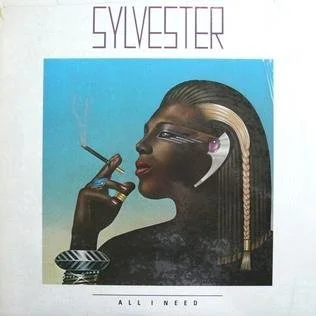
Sylvester. “You Make Me Feel” https://www.youtube.com/watch?v=jz6sqq_MGCAStep II (1978).
The BeeGees. “Staying Alive” https://www.youtube.com/watch?v=z2qoihbzc3E Soundtrack to Saturday Night Live (1977).
The Hues Corporation. “Rock The Boat” https://www.youtube.com/watch?v=gSP_Jqn5eUMFreedom for the Stallion (1973).
Thelma Houston. “Don’t Leave Me This Way” https://www.youtube.com/watch?v=rUdw7V-FC_QAny Way You Like It (1976).
The Pointer Sisters. “I’m So Excited” https://www.youtube.com/watch?v=F6m53yhdrGASo Excited (1982).
Village People. “YMCA” https://www.youtube.com/watch?v=RN8Li7kYNnwCan’t Stop The Music (1978).