Child Singers and Age-Inappropriate Songs
Historically, the teenage demographic has been a target market for music promotion and marketing, in view of their high interest and consumption which is often propelled by the need to establish a unique identity different and untethered from their parents’.
This trend has factored in the quest for youthful artists by record label owners. Publishing houses equally employ young songwriters to write songs depicting the teenage reality and fantasies. Motown was even known to be the “Sound of Young America”. But the question is how young is young? At what point do the young begin to fantasize and dabble with issues like young love? Is young love an organic experience or the outcome of a systemic conditioning? Were our foreparents thinking of love and romance at age 10?
When I first heard the song “Who’s Loving You?” by The Jackson 5, featuring 10-year old Michael Jackson as the lead singer, I shivered even as a child, at the time. I felt violated because it felt misplaced for someone that young to lyrically transmit the emotions associated with adulthood. As much as he sang with glee and passion, the song was indigestible and a clear demonstration of putting a square peg in a round hole. The missing puzzle was the lack of experience in matters of the heart. In my mind, I thought, so Michael Jackson had a girlfriend who he treated badly at such a tender age? That song was released in the 1960s!
Since then, child singers have appeared sporadically on the music scene, and swept us off our feet with their innocence and singing gusto. The theme of romantic love has been a recurring decimal in their song catalogues. They sing about matters that misalign with their lived reality. They sing despite lacking maturation and essence. Love songs are merely performative. Nonetheless, they have impacted young impressionable fans into the pursuit and acceptance of early romance and early sex as the norm. Generally, society has been desensitized to its inexpediency.
I have a sneaking suspicion that this trend was orchestrated to destroy children, especially in the wake of the manifold revelations about child trafficking which have made the rounds in recent years. I conjecture that these songs were written by paedophiles, not young writers as often stated, in the music industry who compelled young children to perform them as a mechanism for socially conditioning the demographic of minors to foster susceptibility and the quest for peer acceptability. Of course, to be a cool kid, you had to have a boyfriend or girlfriend. You had to have early sexual relations. Otherwise, you were an anomaly. Interestingly, when the consequences for this lifestyle reared its head, society abandoned the victim to his fate. And the parent whose counsel the child had previously rebelled against, became the burden bearer.
These songs have engendered early child sexualization, commodification and adultification. And for the child singers, they suffered arrested mental development as their parents sacrified them on the altar of music commercialization.
Back to the subject of experience! Two anecdotes from artists within the industry bear credence to its saliency in the songs that can be performed by an artist because experience creates relatability and authenticity which increase artistic value. Babyface, while talking about the decision to assign the song “Not Gonna Cry”, one of the soundtracks to the film Waiting to Exhale released in 1995 to Mary J.Blige, underlined her ability to transport and alchemize pain through song.
The song encapsulated the pain of Bernadine Harris , a main character in the film who had been married to a man she invested her best years into, only to be abandoned and divorced when life got better. Mary had no similar experience, but she has become somewhat stereotypical in that she has carved a niche in the industry for sad songs. Her prior songs primarily reflect one who has undergone familial and romantic relationship traumatization. This antecedent made her the best interpreter of the song. As Babyface notes, “She sang the song like she had been through it. She sang it like she wrote it”.
The second anecdote comes from Lauryn Hill who was questioned about the absence of a sophomore album, since releasing her phenomenal debut album The Miseducation of Lauryn Hill, twenty-seven years ago. And her response is instructive: “…I was like in the studio working hard trying to get it done. And you know music was created…that I think people will appreciate, but it wasn’t my best…because there was no substance. And there was no substance because there was no experience…And the only reason why The Miseducation was the album it was, was because of the myriad of experiences that took place before the production part, before the creation. You know what, I can’t create and not live”.
This begs the questions, where does experience fit into the adult songs sung by child singers/minors? What role do parents play in the materialization of such malady? Do we attribute the performance of such songs to talent or sheer commodification? Beyond the immediate financial gains made by music proprietors, who profits from the adultified songs performed by children? How did we become desensitized as a society not to notice the awkwardness of the situation and its inherent implications and significance? Where was Aaliyah’s parents when she sang “Age Ain’t Nothin’ But A Number”, and what was their impression? Was it delight, glee, pride, satisfaction or outright disgust and disappointment in their failure as parents?
Many parents are unqualified for the role. Children are viewed as personal properties whose existence is either to gain societal validation or attain unfulfilled imaginary aspirations and desires. It would have been more impactful if child singers sang about their dysfunctional homes and abusive parents. But, I suppose such themes are unprofitable for the money machine.
What follows is a playlist of adultified songs performed by children. This list omits singers like Britney Spears and Christina Aguilera who were already 18, before venturing into the domain. Instructively, a greater majority of the young singers of adultified songs emerge from the African American demographic and were minors. Food for thought!
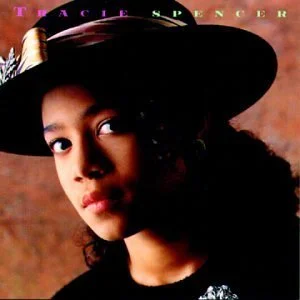
Tracie Spencer
Aaliyah. “Age Ain’t Nothin’ But A Number” https://www.youtube.com/watch?v=n7kvhoQJcKQ Age Ain’t Nothin’ But A Number (1994). Age 15
Bobby Brown. “Girl Next Door” https://www.youtube.com/watch?v=kw_JqvRQ200 King Of Stage (1986). Age 17
Brandy. “Brokenhearted” https://www.youtube.com/watch?v=Uzgv3xD5Dt4 Brandy (1994). Age 15
Hi-Five. “I Like The Way” https://www.youtube.com/watch?v=5eASeDQ8ERg Hi-Five (1990). Age 15
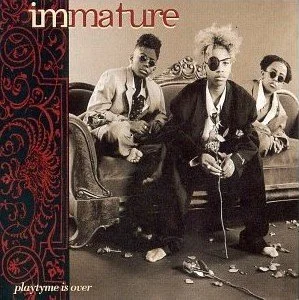
Immature (now IMx). “I Wanna Know U That Way” https://www.youtube.com/watch?v=cwXfrewYrHk On Our Worst Behaviour (1992). Age 11
Jackson 5. “Who’s Lovin’ You” https://www.youtube.com/watch?v=IKlTR6Wlu0o Diana Ross Presents The Jackson 5 (1969).
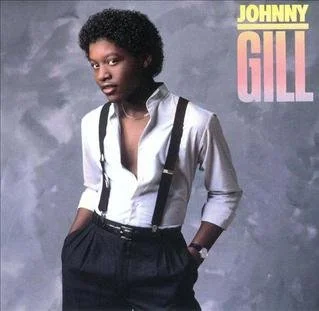
Johnny Gill. “Super Love” https://www.youtube.com/watch?v=EF2goDKAjww Johnny Gill (1983). Age 17
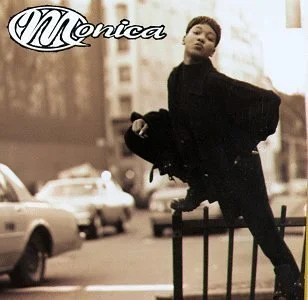
Monica. “Why I Love You So Much” https://www.youtube.com/watch?v=dADMdxcJMvA Miss Thang (1995). Age 14
Musical Youth. “Never Gonna Give You Up” https://www.youtube.com/watch?v=25H8WCNhxH0 The Youth Of Today (1982).
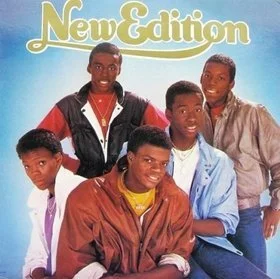
New Edition. “She Gives Me A Bang” https://www.youtube.com/watch?v=zO5cRhGZHkc Candy Girl (1983). Age 14-17
Shanice. “The Way You Love Me” https://www.youtube.com/watch?v=zbiCKJ96NU0 Discovery (1987). Age 14
Soul 4 Real. “Every Little Thing I Do” https://www.youtube.com/watch?v=MhcF1oDBjmk Candy Rain (1995).
Stacy Lattisaw. “When You’re Young And In Love” https://www.youtube.com/watch?v=6Yz6J2BpSHM Young And In Love (1979). Age 12
Tevin Campbell. “Tell Me What You Want Me To Do” https://www.youtube.com/watch?v=LpMlZCXPYRQ T.E.V.I.N (1991). Age 14
Tracie Spencer. “Symptoms Of True Love” https://www.youtube.com/watch?v=52KMgB7K6LE Tracie Spencer (1988). Age 12